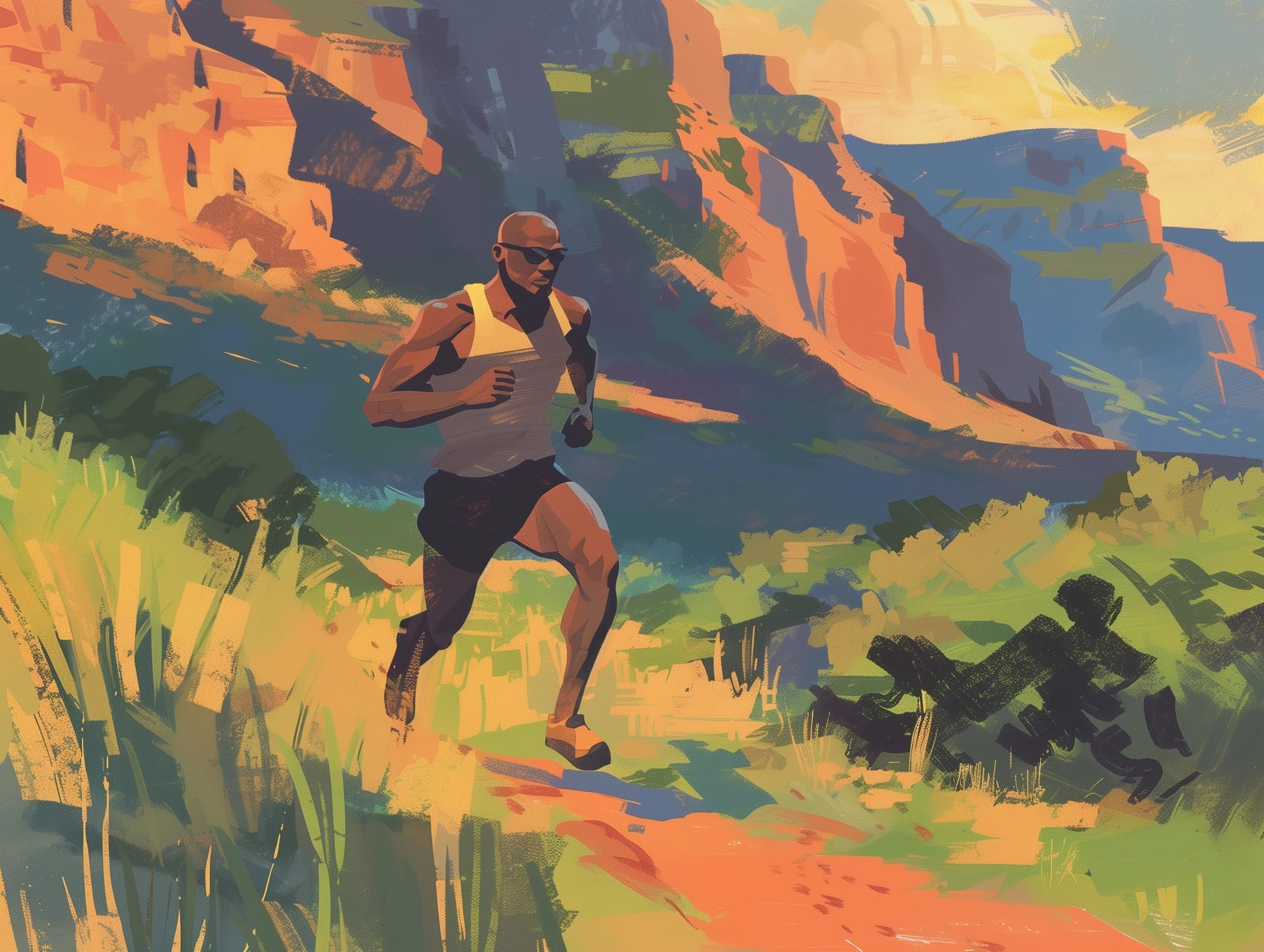

10K Training Program
Here’s a 10-week training plan to help you prepare for a 10K race (6.4 miles). The plan gradually increases in intensity to build endurance, speed, and overall running fitness. It’s suitable for beginners or those looking to improve their 10K time.
This is an 8-week progression designed to build the aerobic base, speed, and confidence needed to run a strong 10K (6.2 miles).
Each week follows the same rhythm so your body knows what to expect:
- Easy runs to build endurance without wearing you down
- Tempo or interval sessions to sharpen pacing control and running economy
- Long runs that slowly extend your distance and mental stamina
Rest days aren’t a luxury — they’re the reason adaptation happens. Rearranging workouts is fine, but always protect recovery days.
The key to improvement is contrast: easy days should feel easy so hard days can feel purposeful. Trust the plan and let the fitness compound week by week.
This plan uses three main types of workouts: long runs, intervals, and tempo runs.
Together, they build your engine, your speed, and your ability to hold a strong pace for the full 5K.
Long Runs 🐉
Long runs are the cornerstone of endurance training. They improve your aerobic capacity, muscular endurance, and mental stamina.
Keep the pace comfortable and conversational. You should be able to talk in full sentences without gasping for air. The goal is time on feet and smooth, steady effort.
Interval Runs 👯
Interval training alternates fast running with easier recovery. This improves your ability to run faster for longer by challenging your anaerobic system.
A classic session is the 400-meter repeat (about a quarter mile): run 400m hard, then jog or walk 200m to recover.
You can also use time-based intervals, like:
- Run 1:00 fast, walk 1:00 easy
- Run 0:45 fast, walk 1:30 easy
- Run 0:30 fast, walk 2:00 easy
Repeat that sequence 4+ times, keeping the fast segments controlled, not all-out sprints.
Tempo Runs 🐎
Tempo runs are “comfortably hard” — faster than your easy pace, but sustainable for the full duration of the workout.
These sessions help raise your lactate threshold (the point where fatigue builds quickly), which means you can hold a faster pace for longer on race day.
Warmups 🔥
A proper warm-up prepares your body and nervous system for running. It gradually elevates your heart rate, increases blood flow to your muscles, and wakes up your coordination.
Start each run with 5 minutes of easy walking or light jogging. As you progress, you can add simple drills (skips, high knees, butt kicks, leg swings) to dial in your form.
 Sendō Midori
Cooldowns ❄️
Cooling down helps your body transition smoothly from effort to rest. It gradually lowers your heart rate and can reduce post-run heaviness and dizziness.
After each run, walk for 5–10 minutes. When you have time, follow it with a short stretching or mobility session and some deep, relaxed breathing.
Cross Training and Recovery
Strength work, gentle yoga, and breathwork all support better posture, resilience, and focus on the run. If you want guided support, pair this plan with:
 Sendō
Sendō
 Sendō
Sendō
Final Tips 🏁
- Aim for at least 7 hours of sleep per night whenever possible.
- Fuel with plenty of carbs and protein — you’re asking more from your body now.
- Keep a simple log of miles, how you felt, and any notes. Patterns matter.
- During workouts, it’s okay to slow down or walk — just try to stay in motion and finish the session.
Print this out to track your workouts over time. I'm old school and like to print out my training logs.
Follow the weeks in order. If a week feels too hard, it’s better to repeat it than to push through exhausted. Consistency beats heroics.
| Week | Mon | Tue | Wed | Thu | Fri | Sat | Sun |
|---|---|---|---|---|---|---|---|
| 1 | 2.5 mi run | 3 mi run | 30 min tempo run | 2.5 mi run | Rest | 45 min cross | 3 mi run |
| 2 | 3 mi run | 3.5 mi run | 6 x 400 @ 5K pace | 3 mi run | Rest | 50 min cross | 4 mi run |
| 3 | 3 mi run | 4 mi run | 35 min tempo run | 3 mi run | Rest | 55 min cross | 5 mi run |
| 4 | 3 mi run | 4.5 mi run | 7 x 400 @ 5K pace | 3 mi run | Rest | 60 min cross | 6 mi run |
| 5 | 3 mi run | 5 mi run | 40 min tempo run | 3.5 mi run | Rest | 60 min cross | 6.5 mi run |
| 6 | 3 mi run | 5.5 mi run | 8 x 400 @ 5K pace | 3.5 mi run | Rest | 60 min cross | 7 mi run |
| 7 | 3 mi run | 6 mi run | 45 min tempo run | 4 mi run | Rest | 60 min cross | 8 mi run |
| 8 | 3 mi run | 6.5 mi run | 9 x 400 @ 5K pace | 4 mi run | Rest | 60 min cross | 5K Race |
| 9 | 3 mi run | 5 mi run | 50 min tempo run | 3 mi run | Rest | 60 min cross | 7 mi run |
| 10 | 2 mi run | 3 mi run | 5 x 400 @ 5K pace | 1-2 mi run | Rest | Rest | 10K Race |
When you finish this 8-week block, take a moment to actually recognize the work you just put in. Even if it wasn’t perfect — you showed up, you got stronger, and you’re not the same runner who started.
Celebrate the Win 🎉
- Take a recovery week — light movement, easy miles, sleep, and good food.
- Save your race bib or log your final 10K time to mark the moment.
- If you didn’t race yet, pick a local 10K and give yourself something fun to train toward.
Keep Your Fitness Growing 🔁
- Repeat the final 2–3 weeks to sharpen your speed and aim for a new PR.
- Build into the Half Marathon Training Program to level up your endurance.
- Run this program again — using faster paces on intervals and tempos for an advanced challenge.
Take Care of Your Body 💆
- Feeling beat-up? → a few weeks of Yoga I: Stillness + light jogging.
- Feeling strong? → Strength Training Program to build power for your next race cycle.
- Mental fatigue? → easy trail miles with no watch — run for vibes, not metrics.
Training isn't about perfection — it’s about momentum. Take what you built here and carry it into whatever challenge calls to you next.
 Midori Sendō
Foundations
 Sendō
Sendō
 Sendō
Sendō
 Sendō
Sendō
 Sendō
Sendō
 Sendō
Sendō
Applications
 Sendō
Sendō
 Sendō
Sendō
 Sendō
Sendō

Subscribe to get updates on new content, merch and more from Sendō Worldwide.
Browse the Online Shop for apparel, accessories and training books to equip yourself for the path ahead.
Have a tip, story, or idea? It could end up in a future post. Email me anytime with questions, thoughts, or even confessions — we're all in this together.