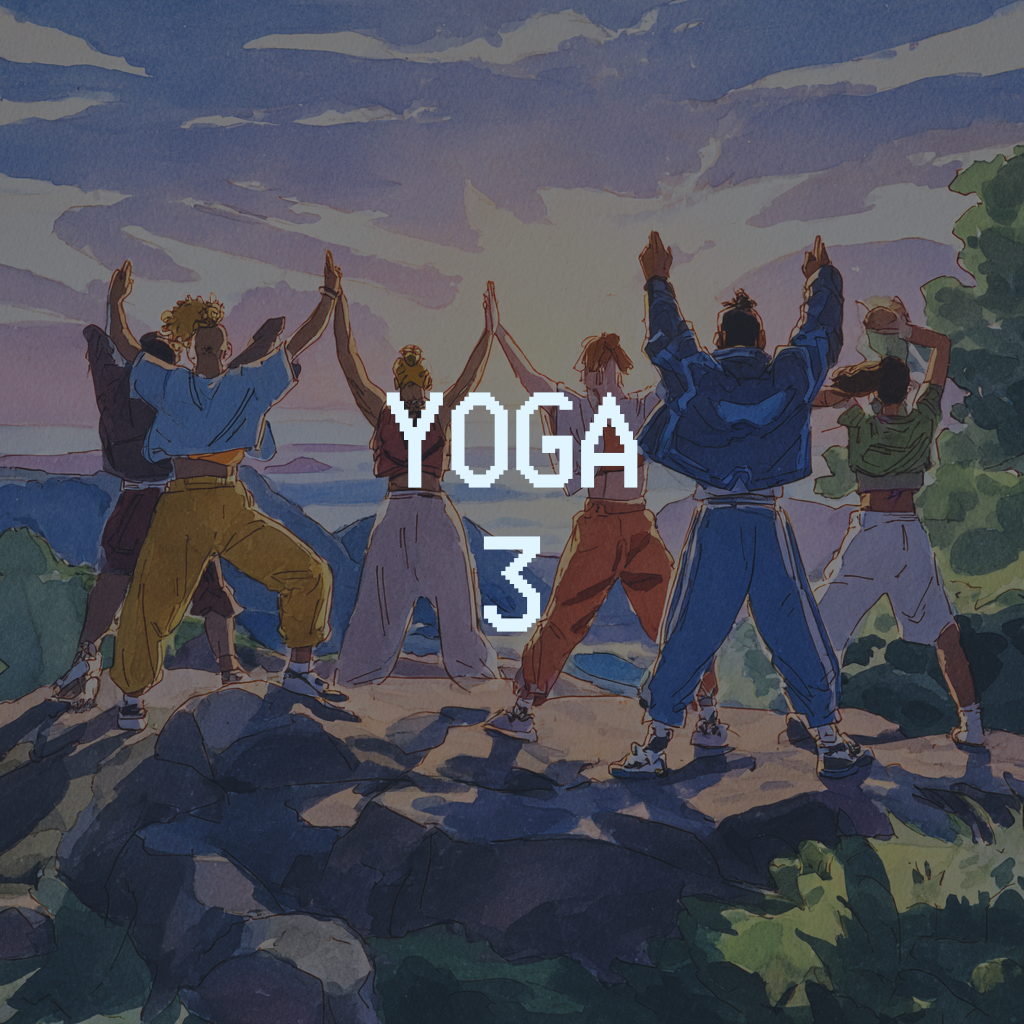
Yoga Training Program III: Fire
Here we cultivate heat — in the body, in the breath, and in the spirit. This path challenges you to go deeper. The sequences are stronger, the breathing more focused, the mind more tested. Through discipline and consistency, you’ll discover new layers of energy, mental clarity, and inner fire. This is not just a workout — it’s a rite of passage.
- Duration: 4 weeks
- Frequency: 6 days per week (+1 rest day)
- Tone: Structured, intense, transformative
- What it'll prepare you for: crushing life and a 5K
- Goal: Build strength, stamina, and mental focus
- Daily Breakdown (45–60 min):
- 30–40 min Ashtanga (Primary Series Intro)
- 10 min Kapalabhati (Skull Shining Breath) or Ujjayi Breath
- 10 min Focused Meditation (e.g. mantra repetition, single-pointed focus)
This 4-week program is about slowing down enough to actually feel what’s happening inside your body.
It builds the foundations of a sustainable yoga practice: mobility, breath control, and mental stillness — not intensity, not flexibility heroics, not aesthetics.
Every session is divided into three components that work together:
- Yoga Asanas (postures) to mobilize joints, strengthen stabilizers, and open tight areas
- Breathwork to train your nervous system to switch from stress → calm on command
- Meditation to develop presence, focus and emotional endurance
The goal isn’t to “get good at yoga.” The goal is to get familiar with yourself — your breath, your movement patterns, your mind, and the way tension leaves the body when you give it time.
This is a gentle program — but it is not easy. Stillness can be confronting. Breath control can feel harder than squats. Sitting with your thoughts can feel like the longest five minutes of the week. Stick with it, and you’ll finish this block more flexible, more relaxed, more patient, and more deeply aware of your own body.
When you’re done, you’ll be ready for Yoga Program II: River, where movement becomes more fluid and strength begins to meet breath.
Consistency Over Intensity
A little bit every day beats one heroic session a week.
Your body adapts to repetition — not force.
The Breath Leads
If the breathing gets ragged, the mind gets scattered and the body tenses.
Slow breathing first → better movement second.
Minimum Effective Dose
You don’t have to stretch to your limit.
Mild discomfort + long slow breathing = faster progress than forcing flexibility.
Awareness Before Performance
Notice the body before trying to change it:
tight hips → tight mind
shallow breath → anxious nervous system
As awareness increases, change happens naturally.
Meditation Is Training
You’re not trying to feel peaceful — you’re practicing staying.
Your ability to sit still here becomes your ability to stay steady during stress in real life.
Your Mat Is Not a Stage
No comparison. No “how good am I?”
Every pose has a version that works for your body today — that is always enough.
Asanas
Asanas (postures) enhance flexibility, balance, and muscle strength, which supports better posture and reduces injury risk in runners. Its emphasis on breathwork and mindfulness also aids mental focus and stress reduction, beneficial for maintaining endurance.
The Down Dog Yoga app has free practices that you can set by duration and difficulty level. Ashtanga Yoga (Old) and Vinyasa Yoga are my go-to practices for a good mix of breathing, stretching and strength training.
Breathing Exercises
Breath is life. In yoga, it’s not just a way to stay calm—it’s a discipline of its own. Known as Pranayama, breath control is one of the Eight Limbs of Yoga and serves as a bridge between the physical and mental practices. Whether you're deep in a pose, grinding through a lift, or zoning in on a long run, your breath is the thread that connects body, mind, and intention.
When used with awareness, breath becomes a powerful tool for regulating energy, focus, recovery, and emotional state. It's not background noise—it's the remote control for your nervous system.
The Wim Hof Method (WHM) and Oak Meditation apps have free breathing exercises that you can set by duration.
Meditation
Breathing exercises naturally extend into the withdrawal of senses, concentration and meditation, which supports mental resilience and focus. Regular practice helps manage pre-race nerves and develop a calm, clear mindset, which is valuable for maintaining motivation and tackling long or challenging runs.
Meditation is your training ground for presence. The same focus that helps you sit still for five minutes can help you stay composed during mile 20 of a marathon, or hold form through the last set of a hard lift. It’s not a shortcut to enlightenment—it’s reps for your mind.
The Oak Meditation app has guided and unguided meditations available for free.
| Day | Yoga Practice (30–45 min) | Breathwork (10 min) | Meditation (10 min) |
|---|---|---|---|
| Mon | Ashtanga: Primary Series Intro | Ujjayi Breath (Strong) | Mantra Meditation |
| Tue | Power Yoga: Strength Flow | Kapalabhati (Skull Shining) | Single-Pointed Focus (Trataka) |
| Wed | Power Yoga: Core & Balance | Box Breathing + Retention | Mindfulness Under Stress |
| Thu | Ashtanga Flow: Standing Series | Ujjayi + 4-4-4-4 | Loving-Kindness Revisited |
| Fri | Ashtanga + Flow Hybrid | Kapalabhati | Visual Journey |
| Sat | Dynamic Warrior Flow | Ujjayi with Bandhas | Breath Awareness |
| Sun | Rest | Gentle Deep Breathing | Silent Sitting |
Completing this practice means you’ve done something subtle but powerful: you slowed down, paid attention, and built awareness. Yoga doesn’t shout progress — it reveals it over time.
Integrate the Practice 🧘
- Take a few days of unstructured movement — short flows, walks, breathwork.
- Notice changes in how you move, breathe, and recover.
- Carry one or two poses or breathing patterns into daily life.
Continue the Path 🔁
- Repeat this program to deepen familiarity and ease.
- Progress into a more demanding or longer-duration practice.
- Use yoga alongside strength or endurance training to stay balanced.
Listen Closely 🌿
- Feeling stiff or overloaded? → prioritize stillness and mobility.
- Feeling clear and energized? → layer in strength or endurance work.
- Feeling scattered? → shorter sessions, more consistency.
Yoga isn’t about mastery — it’s about presence. Keep returning to the mat.
 Midori Sendō
 Sendō
Sendō
 Sendō
Sendō
 Sendō
Sendō
 Sendō
Sendō
 Sendō
Sendō
 Sendō
Sendō
 Sendō
Sendō
 Sendō
Sendō
 Sendō
Sendō
 Sendō
Sendō

Subscribe to get updates on new content, merch and more from Sendō Worldwide.
Browse the Online Shop for apparel, accessories and training books to equip yourself for the path ahead.
Have a tip, story, or idea? It could end up in a future post. Email me anytime with questions, thoughts, or even confessions — we're all in this together.