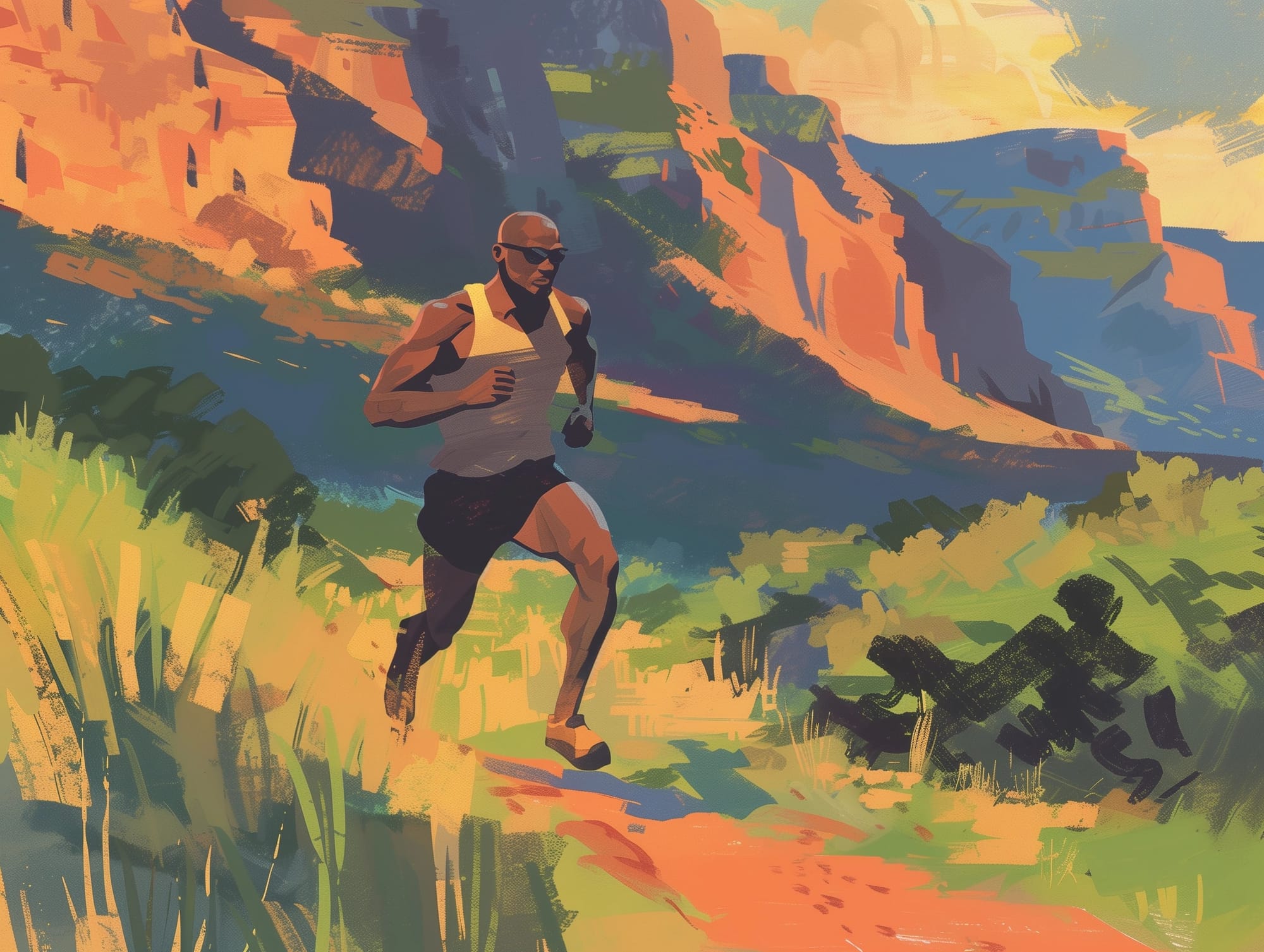

Climbing & Descending Techniques
The hill isn’t your enemy. It’s your teacher. Cyclists talk about suffering on climbs and flying on descents — but both are just expressions of rhythm. Climbing rewards patience; descending rewards trust. Master both, and the landscape stops being a barrier and becomes a playground.
The Rhythm of Ascent
Climbing isn’t a contest against gravity — it’s a conversation with it.
Push too hard and the hill pushes back. Breathe with it and it carries you upward.
Cadence First, Power Second
Torque burns matches. Cadence preserves them.
- Spin small gears
- Aim for 80–90 rpm
- Breathe steady, not strained
If you can speak in short sentences, you’re climbing well.
If you’re gasping or grinding, ease off — the hill isn’t leaving.
Posture & Balance
Efficiency > heroics.
- Stay seated for most of the climb — it protects traction and saves energy
- Keep core engaged, shoulders loose
- Knees track forward, not outward
- Slide slightly back on the saddle to recruit glutes and keep the rear wheel planted
- Stand only to stretch, crest short steep sections, or launch an attack — then sit again
Climbing is quiet. When the upper body sways, energy leaks.
Gearing Strategy
Shifting early is control; shifting late is panic.
- Downshift before steep sections
- Keep cadence smooth across the whole climb
- Avoid over-gearing — grinding may feel heroic, but it slows you down
Think of gears as volume control — not a weapon.
The Mental Shift
On long climbs, the mind tires before the legs do.
- Don’t stare at the summit
- Lock into breath + cadence
- Count strokes or match music tempo
- Treat each minute like its own goal
The climb is a mirror. It reflects your patience more than your strength.
The Art of Descent
Where climbing asks you to endure, descending asks you to trust — in your bike, your balance, and your awareness.
Confidence comes from technique, not bravery.
Control Through Vision
The bike goes where your eyes look.
- Look through the turn, not at the road beneath you
- Scan ahead for line, debris, and braking points
- Peripheral vision handles the rest
The eyes lead; the bike follows.
Body Position — Low & Quiet
Stability is physics, not aggression.
- Lower your center of gravity by bending elbows and dropping the torso
- Heels down, pedals level through turns
- Hips guide the lean, not the handlebars
Let the bike lean beneath you — your body stays balanced above it.
Braking Technique
Braking is an instrument, not an emergency switch.
- Brake before the corner, release inside it
- Feather, don’t squeeze — light repeated pressure prevents skids
- Use front brake for power, rear for stability
Smooth braking = smooth confidence.
Flow State
A good descent feels like water — all instinct, no resistance.
- Gravity provides the energy
- You provide the guidance
- Speed is not the goal — flow is
The descent teaches what the climb never can:
sometimes the right move is to stop fighting and start trusting.
 Sendō
Sendō
 Sendō
Sendō
 Sendō
Sendō
 Sendō
Sendō
 Sendō
Sendō
 Sendō
Sendō
 Sendō
Sendō
 Sendō
Sendō
 Sendō
Sendō
 Sendō
Sendō
 Sendō
Sendō
 Sendō
Sendō
 Sendō
Sendō
 Sendō
Sendō
 Sendō
Sendō
 Sendō
Sendō
 Sendō
Sendō
 Sendō
Sendō
 Sendō
Sendō
 Sendō
Sendō
 Sendō
Sendō
 Sendō
Sendō

Subscribe to get updates on new content, merch and more from Sendō Worldwide.
Browse the Online Shop for apparel, accessories and training books to equip yourself for the path ahead.
Have a tip, story, or idea? It could end up in a future post. Email me anytime with questions, thoughts, or even confessions — we're all in this together.